
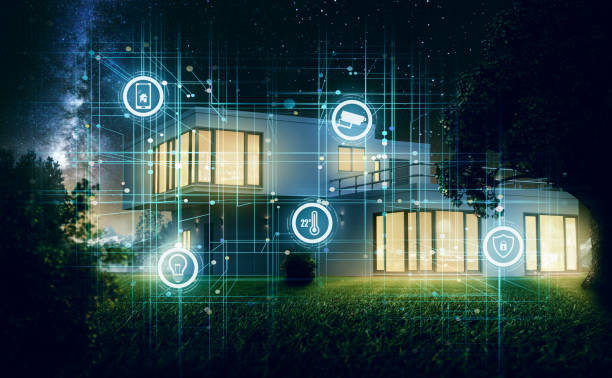
The global security landscape is undergoing its most significant paradigm shift since the transition from analog tapes to digital networks. Video surveillance is no longer just a passive tool for recording events after they occur; it has evolved into an active, intelligent ecosystem driven by Artificial Intelligence (AI), Edge Computing, and Deep Learning algorithms.
As we navigate the complexities of property protection and operational efficiency, relying on traditional “blind” recording is no longer enough. Modern security demands proactive threat prevention, automated monitoring, and intelligent data analysis.
The Data Drive: Analytics and Market Growth
The shift toward intelligent surveillance is heavily backed by global market data. According to recent research by MarketsandMarkets, the global AI in video surveillance market size is valued at $3.67 Billion and is projected to experience exponential growth, reaching $10.88 Billion. This represent a staggering 17.9% Compound Annual Growth Rate (CAGR).
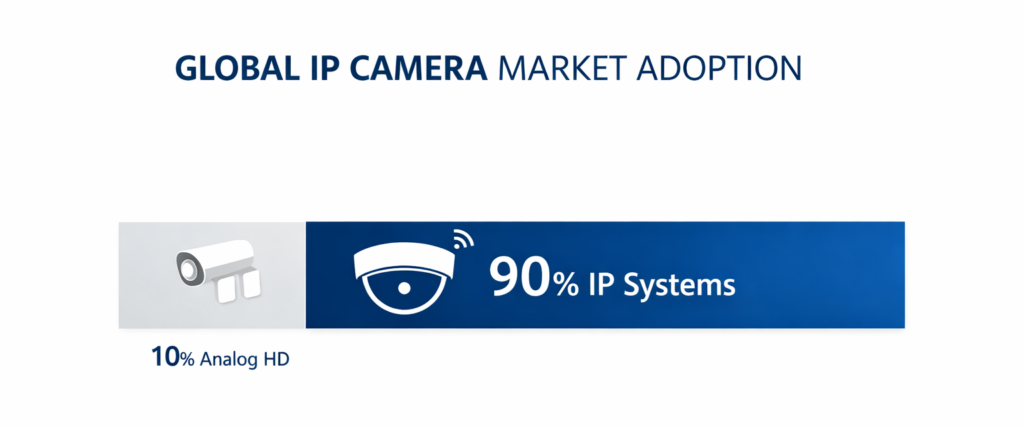
Furthermore, industry reports from Novaira Insights reveal a massive structural shift in infrastructure: legacy analog high-definition systems have plummeted to just 10% of total industry revenue, while connected, digital Internet Protocol (IP) cameras now command 90% of the market.
Intelligence has officially become the global industry standard. Nearly 80% of all professional cameras shipped globally feature built-in analytics capabilities, with two-thirds already utilizing advanced deep learning-based functionality.
Passive Recording vs. Active Prevention
The traditional approach to security was purely forensic. A camera recorded footage, an incident occurred, and hours were spent manually reviewing pixelated video to figure out what happened.
Modern commercial and residential security architectures have turned this timeline upside down through three key pillars:
1. Edge-Based AI and Behavioral Analytics
Rather than streaming raw video to a central server or cloud for processing—which hogs network bandwidth—modern cameras process data directly “on the edge” (within the hardware itself). Computer vision algorithms can accurately distinguish between a stray animal, a blowing tree, and a human intruder.
Advanced systems can now detect specific behaviors, such as loitering in restricted areas, line-crossing, or vehicle classification, triggering real-time alerts before a perimeter is ever breached.
2. The Cloud and Video Surveillance-as-a-Service (VSaaS)
The rise of Video Surveillance-as-a-Service (VSaaS) has revolutionized data management. Cloud-integrated systems offer remote access from any device worldwide, secure off-site backup that cannot be physically stolen during a break-in, and scalable storage options.
However, professional integrators emphasize a hybrid architecture: local, hard-wired Network Video Recorders (NVRs) paired with secure cloud gateways to ensure maximum reliability and network stability.
3. Low-Light Performance and Optical Advancements
Hardware technology has evolved alongside software intelligence. Modern image sensors boast significantly improved Low-Light Performance and High Dynamic Range (HDR) capabilities.
Cameras can now capture full-color, high-contrast, crystal-clear footage in pitch-black environments without relying on glaring, visible spotlights, providing law enforcement with actionable evidence such as license plates and facial features.
The True Value: Operational Insights
For businesses, the return on investment (ROI) of a modern low-voltage security infrastructure extends far beyond loss prevention. Sophisticated organizations are utilizing their security feeds to optimize day-to-day operations.
- Retail Environments: Heat-mapping and crowd-density analytics allow store owners to track customer foot traffic patterns, optimize product placement, and manage checkout lines efficiently.
- Industrial and Logistics: Integration with Access Control and smart sensors allows facility managers to audit employee entry/exit timelines, verify safety compliance protocols, and monitor shipping docks in real-time.
Conclusion: Engineering a Resilient System
As technology continues to accelerate, the line between IT networks and physical security has completely blurred. A high-performing surveillance setup is only as reliable as the underlying network architecture—including proper data drops, structured cabling, and secure access points.
Investing in an intelligent, professionally integrated security and networking platform is no longer just about buying cameras; it is about building a secure foundation for long-term peace of mind, operational clarity, and robust property protection.